TikTok Diamonds 2026: Payout, Earnings, Withdrawal & Safety
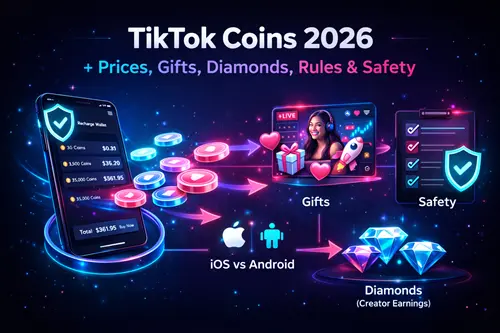
TikTok Diamonds are the point where the platform economy starts to matter for creators in a practical way. Viewers buy coins, spend those coins on gifts, and creators may later see diamonds reflected in their earnings flow when gifting activity is eligible. Most confusion starts when people try to flatten that entire chain into one viral “rate” or one screenshot that supposedly explains everything. In reality, diamonds sit inside a controlled platform system shaped by TikTok’s own rules, verification logic, eligibility requirements, payout thresholds, regional differences, and processing windows. That is why two creators can see very different outcomes even when the audience behavior appears similar on the surface.
The safest mental model for 2026 is simple: if a value, balance, or payout step cannot be confirmed inside TikTok’s own earnings or payout screens, it should not be treated as decision-grade information. This page gives you the full working map of TikTok Diamonds in one place: what they are, how gifts relate to earnings, how creators usually earn, how withdrawals work, why delays happen, and how to avoid the scam patterns that appear exactly when people become impatient. If you want the full foundation first, start with the TikTok Coins hub. If you need the creator-side picture now, this page is the final cluster version and already includes the topics that were previously split into separate subpages.
How TikTok Diamonds work in 2026
Important to know: diamonds are an earnings unit, not a wallet currency you can move around. Verification always beats rumors.
| What people assume | What’s actually true | Best next step |
|---|---|---|
| Diamonds are “money” by default | Diamonds represent earnings potential tracked inside TikTok | Check creator earnings or payout panels in-app |
| One fixed diamonds → USD rate exists | Rates vary; only in-app numbers are reliable | Use the value shown in your payout dashboard |
| Gifts equal creator payout | Viewer spend ≠ creator earnings after platform rules | Learn the full chain: coins → gifts → diamonds → payout |
| Cashout can be done via third parties | Most third-party “cashout” offers are scams | Use only TikTok’s supported payout methods |
For definitions, account behavior, and troubleshooting, the safest reference point remains the official TikTok help ecosystem: TikTok Support. If your payout or creator settings differ from someone else’s screenshots, treat the in-app information shown on your own account as the highest-priority source. Platform screenshots shared on social media are often incomplete, outdated, region-specific, or missing the account context that explains why the numbers look different.
What happens between a gift and a payout
The easiest way to understand TikTok Diamonds is to separate the system into two sides. On the viewer side, coins are the spending unit. A user buys a coin bundle, then spends coins on gifts in Live or on eligible content. On the creator side, diamonds may appear as an internal earnings outcome attached to gifting activity. The gap between those two moments is where most myths are born. People see viewer spend, assume a direct conversion formula, and then search for a universal rate that is supposed to work for every account. That formula mindset is exactly what creates unnecessary confusion, because TikTok can apply regional availability, account eligibility rules, verification requirements, thresholds, and processing windows that are not visible in a random screenshot.
The safer planning model is much simpler and much stronger. First, confirm what your own account shows in the earnings and payout areas. Second, treat external calculators only as rough educational tools, not as proof. Third, never let uncertainty push you into risky behavior such as clicking “instant cashout” links, entering credentials on external pages, or trusting someone who claims to unlock payouts manually. The moment creator earnings become visible, scam attempts increase because urgency goes up. That is why the diamonds topic is not just about money logic. It is also about workflow discipline: verify in-app, document what you see, and make decisions only from confirmed account data.
TikTok Diamonds guide map
This cluster now covers the full topic set inside one page, so you no longer need satellite pages for the same intent family. Use the internal sections below depending on what you need: definition, money logic, earning patterns, withdrawal steps, myths, Live behavior, payout delays, or scam prevention. The goal is to keep all diamonds-related decisions on one authoritative URL.
Definition, scope, and what diamonds are not.
How to think about USD or EUR estimates safely.
Audience behavior, gifts, and practical earnings logic.
What to protect when earnings become visible.
Verification, setup, thresholds, and process basics.
Why viral “rates” create bad decisions.
How Live behavior changes perception of earnings.
Where creators usually get lost inside menus.
Common reasons for delay before panic starts.
The highest-risk patterns to shut down fast.
What are TikTok Diamonds
The cleanest definition is this: TikTok Diamonds are an internal creator-facing earnings unit that may appear when eligible gifting activity happens on the platform. They are not the same as coins, they are not a user-to-user currency, and they are not a public payment instrument you can move around freely between accounts. That distinction matters because most low-quality explanations deliberately blur those lines. Once people start treating diamonds like a portable currency, they become vulnerable to fake promises about transfers, external conversion tools, or off-platform “unlock” services. In practical terms, diamonds should be treated as part of TikTok’s own earnings system, not as a flexible asset you control independently of the platform.
That is also why the safest verification habit is so simple: if a number is not visible in your actual TikTok creator earnings or payout environment, it should not control your next move. This one habit prevents most bad decisions. It also makes your broader strategy stronger, because you stop reacting to rumor-based numbers and start working from confirmed account data. For a creator, that is the difference between stable operations and constant confusion.
Diamonds to money: how to think about payout value
When creators search for “diamonds to money,” they usually want one of two things: either a quick estimate for what gifting activity might mean in real currency, or reassurance that their payout is behaving normally. The problem is that the internet rewards oversimplified answers. People share a single figure and present it as timeless, global, and exact, even though platform conditions, account status, and payout contexts are not identical across creators. That is why “diamonds to USD” or “diamonds to EUR” calculators can be useful only in a very limited sense. They may help you think in ranges, but they should never override what your account actually shows.
A better approach is to separate planning from confirmation. Planning means you can use general estimates to set expectations and compare scenarios. Confirmation means you look only at your own in-app earnings and payout information before making a financial choice. The moment you confuse the two, you become vulnerable to false urgency. That is also why suspicious pages love precise promises. Precision creates trust, even when it is fake. The safer rule is: estimates are for orientation, in-app payout data is for decisions.
How creators earn through gifts and audience behavior
Most creators do not actually have a payout problem. They have a model problem. They compare viewer spending, creator gifts, audience size, and social media rumors as if those were interchangeable signals. They are not. Viewer spend reflects what an audience member paid for coins. Creator earnings reflect what TikTok records on the account side after the gifting flow passes through platform logic. That means two creators with similar audience energy can still end up with different-looking outcomes, especially if one account is more established, more consistent, or simply operating under a slightly different context.
The strongest creators usually think less about “the rate” and more about repeatable behavior. They look at whether gifting happens consistently, whether their audience understands gifting moments, whether Live sessions are structured well, and whether their payout setup is clean and stable. In other words, they optimize what they can influence directly. Chasing a viral conversion screenshot is emotionally tempting, but operationally weak. A creator who builds consistent audience trust, clearer gifting moments, and safer payout habits usually outperforms the creator who keeps hunting a mythical universal formula.
Payout safety: what to protect when earnings become visible
One of the most dangerous phases in the entire creator lifecycle is the moment when account earnings start to matter. As soon as creators think “there is money here,” attackers know the account owner may act faster, verify less carefully, and accept shortcuts that would normally look suspicious. That is why payout scams are so effective. They are not built on technical sophistication alone. They are built on impatience, confusion, and the emotional pressure of visible earnings. Fake support messages, “manager” offers, recovery links, instant cashout tools, and urgent payout warnings all exploit the same behavior gap.
The defensive rule is strict and uncomplicated: keep every real payout action inside TikTok’s own official flow. If someone asks for your password, a one-time code, banking details outside the expected in-app setup, or a login through an unfamiliar page, stop immediately. You do not need a clever anti-scam system if you keep the rule this simple. Internal platform settings are where the safe process lives. External urgency is where most account losses begin.
How to withdraw diamonds safely
“Withdraw diamonds” sounds simple, but the process becomes messy when creators skip the setup basics. Before assuming something is broken, check the structure of the workflow. First, make sure your account has the necessary verification state. Second, confirm the payout method details are correct and current. Third, check whether there are thresholds, regional requirements, or pending in-app notices that explain why payout is not available yet. Most frustrations happen because one of these layers is incomplete, not because the balance vanished.
The best withdrawal mindset is procedural rather than emotional. Follow the official steps, confirm each field carefully, and avoid trying to “fix” normal processing time with third-party shortcuts. Slow is not automatically broken. Delayed is not automatically stolen. A creator who documents what they see, checks thresholds, and uses official settings usually resolves the issue with far less risk than someone who panics and starts accepting outside help.
Conversion myths that create bad decisions
The most damaging myth is the belief that there is one fixed diamonds-to-money rate that can be trusted across accounts, regions, and time periods. That myth survives because it is emotionally satisfying. It gives creators certainty. But false certainty is exactly what bad actors need in order to move people off-platform. Once a creator believes there must be one hidden exact answer, they become easier to lure with “exclusive calculators,” “insider payout tools,” or fake support pages that claim to reveal the real value.
Another myth is that viewer-side pricing and creator-side earnings must always line up neatly. They do not. Purchase costs, app store differences, platform fees, internal rules, and creator payout conditions do not combine into a clean public formula. And the final myth is procedural: the idea that support will proactively DM creators with payout shortcuts. Real platform support flows do not operate like scam scripts. If someone is trying to rush you into a verification step outside the expected environment, the problem is not your payout. The problem is the person contacting you.
Live gifts to diamonds: why Live earnings feel inconsistent
Live gifting creates a very different emotional environment from static content. Volume can change quickly, audience mood can shift in minutes, battles can distort perception, and viewers often make fast purchase decisions with limited reflection. That makes Live earnings feel more volatile, even when the system underneath is functioning normally. Creators tend to interpret those spikes and dips as proof that a conversion rule changed, but in many cases the real cause is simply that Live behavior is more compressed and more reactive than other engagement contexts.
The safest way to analyze Live-driven earnings is to avoid single-session conclusions. Look for patterns over time, not isolated moments. Compare confirmed in-app outcomes, not social media screenshots. And keep audience behavior separate from payout logic in your thinking. When you do that, Live becomes easier to manage. It stops feeling like a mystery and starts behaving like a high-variability environment that still has reliable internal checkpoints.
Creator tools and earnings visibility
Many creators start searching for external answers because they cannot find the right in-app views. Menus differ, account interfaces change, regions may not show identical paths, and people often assume that missing visibility means missing money. In practice, the problem is frequently navigational rather than financial. That is why one of the smartest habits you can build is basic environment orientation: know where your earnings views live, what your payout section looks like, and which account warnings matter before you ever need them under pressure.
This also protects you from fake tools. Scam pages thrive when creators are already disoriented. If you know how your legitimate workflow looks and feels, suspicious steps become easier to spot. If you do not, anything with the right colors and a convincing logo can look believable. Familiarity with your real creator environment is a security asset, not just a convenience.
Payout not received: what to check before assuming the worst
If a payout does not arrive when expected, the first priority is not to search wider. It is to narrow the problem correctly. Check your verification status, confirm the payout method details, review thresholds, and look for in-app notices that may explain a processing hold. Those are the most common reasons. Many creators jump directly to the conclusion that the funds are missing, but the more common explanation is a delay linked to setup, review, or processor timing. Panic turns a manageable issue into a risky one because it invites outside interference.
A better response is evidence-first troubleshooting. Collect what your app actually shows. Note timestamps, balances, and any warning messages. Then, if support is needed, approach it through official channels with concrete details rather than generalized fear. This protects both the account and the payout process. It also reduces the chance that you will hand your access to someone posing as a fixer.
How to avoid TikTok diamonds cashout scams
Cashout scams succeed because they mimic exactly what a stressed creator wants to hear. They promise speed, certainty, recovery, priority review, or a hidden method that “most people don’t know.” Those offers are dangerous because they are designed around the moment when a creator feels most vulnerable: a visible balance, a delayed payout, or a fear that earnings will disappear. The attacker does not need to understand your account deeply. They only need to understand your urgency.
The core defense model is rigid by design. Do not log in through links sent in direct messages. Do not provide one-time codes. Do not install tools, extensions, or “helpers.” Do not share banking details anywhere except the official payout flow you initiated yourself. If you make that rule non-negotiable, most scam paths collapse immediately. Good security at this stage is not about advanced detection. It is about refusing to leave the official environment.
What changes earnings outcomes for TikTok Diamonds
Regional conditions matter more than most creators expect. The same gifting activity can lead to different-looking payout outcomes because of location-based availability, verification requirements, supported methods, and account-specific conditions. That is why one perfect chart does not exist. If you plan earnings, use your own in-app data as the anchor and treat all external numbers as rough directional context rather than truth.
Account health also matters. This is less exciting than conversion talk, but it explains many surprises. If an account has incomplete verification, a payout method problem, or an internal restriction, the payout flow can slow down or look inconsistent. Good creators often win not because they know a secret rate, but because they keep their setup clean and resolve warnings early.
Timing affects perception too. People compare one payout moment to an old screenshot and assume the system changed. Sometimes it did not. Gifting volume fluctuates, processing windows exist, and payouts move through stages. The safest approach is to track confirmed numbers over time, not single emotional moments.
Common myths that cause expensive mistakes
The first expensive myth is “fixed diamonds rate.” It makes creators chase precision that the platform does not publish publicly, and that chase often ends with unsafe clicks. If someone sells certainty, especially through an unfamiliar page, that certainty is usually the bait.
The second mistake is mixing viewer purchase costs with creator earnings. Device differences can affect how viewers buy coins, but that does not mean the same logic should drive creator payout decisions. Viewer-side cost and creator-side confirmation are not the same layer of the system.
The third myth is “support will DM you.” Real account resolution happens through official help flows, not through random profiles offering urgency, shortcuts, or secret methods. Any message that pressures you to move fast should be treated as suspicious by default.
How diamonds connect with coins, gifts, rules, and safety
Diamonds sit downstream from coins and gifts, and upstream from payout decisions and account protection. If your question is broader than “how much are diamonds worth,” use the related cluster pages below to complete the picture and keep your decisions anchored in the full platform flow.
If you are trying to understand why totals feel inconsistent across screenshots or devices, start with the prices guide. It explains why purchase flows vary and why viewer-side costs should not be confused with creator-side payout confirmation.
If your issue is tied to Live behavior or gifting mechanics, use the gifts guide. It covers how gifting works, where confusion starts, and why some user assumptions fail in practice.
If your real question is about limitations, refund logic, account constraints, or what is allowed under platform rules, go to the rules guide. It helps prevent disputes and expectation mismatches before they become payout frustration.
If anything feels suspicious, especially around messages, login pages, or fake support, jump immediately to the safety guide. That page is the fastest way to recognize takeover patterns before they cost you access.
Conclusion: treat TikTok Diamonds as a system, not a rumor
The safest and most profitable mindset is the same one: treat diamonds as a structured in-app earnings unit, verify everything inside TikTok, and ignore anyone selling a universal rate or a shortcut. Once you understand the chain of coins, gifts, diamonds, and payout, the topic stops feeling mystical. It becomes manageable.
If you are new, start with the definition and the earnings logic. If you are already earning, prioritize payout safety and withdrawal discipline. And if something looks wrong, troubleshoot inside the official flow before you contact anyone outside it. That one habit prevents most payout disasters creators experience.
The questions below cover the same high-risk decision points creators usually struggle with first: payout value, delays, device myths, and fake shortcuts. They are written to help you choose the safe path quickly.
FAQ about TikTok Diamonds
Is there a fixed diamonds-to-USD rate in 2026?
No. There isn’t a single global public rate you can treat as permanent. The only reliable number is what your in-app earnings or payout panel shows for your account at that moment.
What’s safer for planning: calculators or the payout screen?
Use calculators only as rough estimates. For real decisions—withdrawals, budgeting in USD/EUR, disputes, or taxes—base everything on your in-app payout screen and earnings statements.
Why does a viewer’s gift cost not equal creator payout?
Because viewer spend passes through coin pricing, platform fees, and payout rules before it becomes creator earnings. The gap is normal and can vary by region and account conditions.
Which is riskier: “instant cashout services” or waiting for processing?
Instant cashout services are far riskier and often scams. Waiting for TikTok processing is slower, but it’s safe as long as you keep every step inside the official payout flow.
Do diamonds transfer to another user if I change accounts?
No. Diamonds are not designed for user-to-user transfer. If a site promises transfer, conversion, or “unlocking” diamonds, treat it as a scam attempt.
What’s the safest withdrawal path for beginners?
Set up payout only in TikTok’s in-app settings, confirm verification, and use supported payout methods. Never share passwords, SMS codes, or banking access details outside the app.
Why do iOS vs Android rumors show up in diamond payout talk?
People often mix viewer-side coin purchase costs with creator-side earnings. Device differences can affect what viewers pay, but creator payout decisions should always be based on what your earnings panel shows for your account.
What should I check first if payout is delayed?
Check verification status, payout method details, thresholds, and any in-app alerts. Most “missing payouts” are delays from processing windows or incomplete setup, not lost money.
Are “diamond cashout managers” in DMs legit?
No. Fake support DMs are a common takeover tactic. If someone asks for a code, a login, or a link, ignore them and use official TikTok settings or support instead.
Should creators focus more on conversion rate or consistency?
Consistency usually wins. Build stable gifting patterns and safe payout habits, and treat conversion talk as variable. Verify earnings in-app and optimize what you can control: content, trust, and repetition.